Yearly Archives: 2011

Free The Key

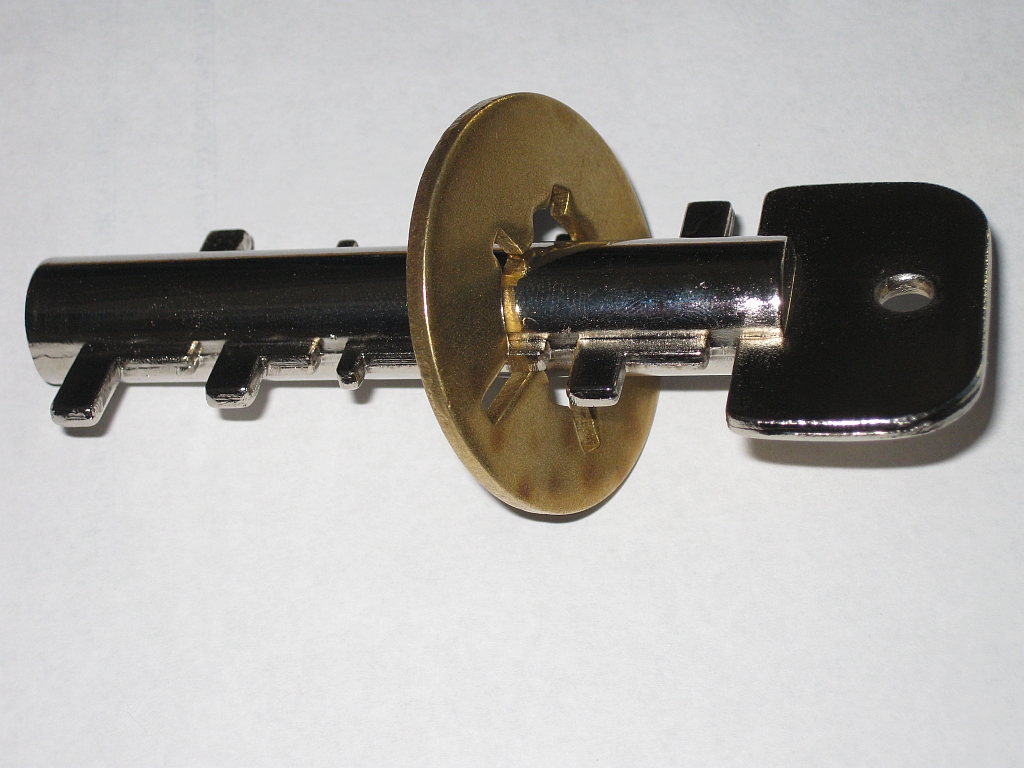
Following on from my recent theme of maze based puzzles, this is a review of Puzzle Master’s metal puzzle, “Free The Key”, designed by Oskar Van Deventer and produced by Puzzle Master themselves. I’d like to thank Puzzle Master for sending me this puzzle to review.

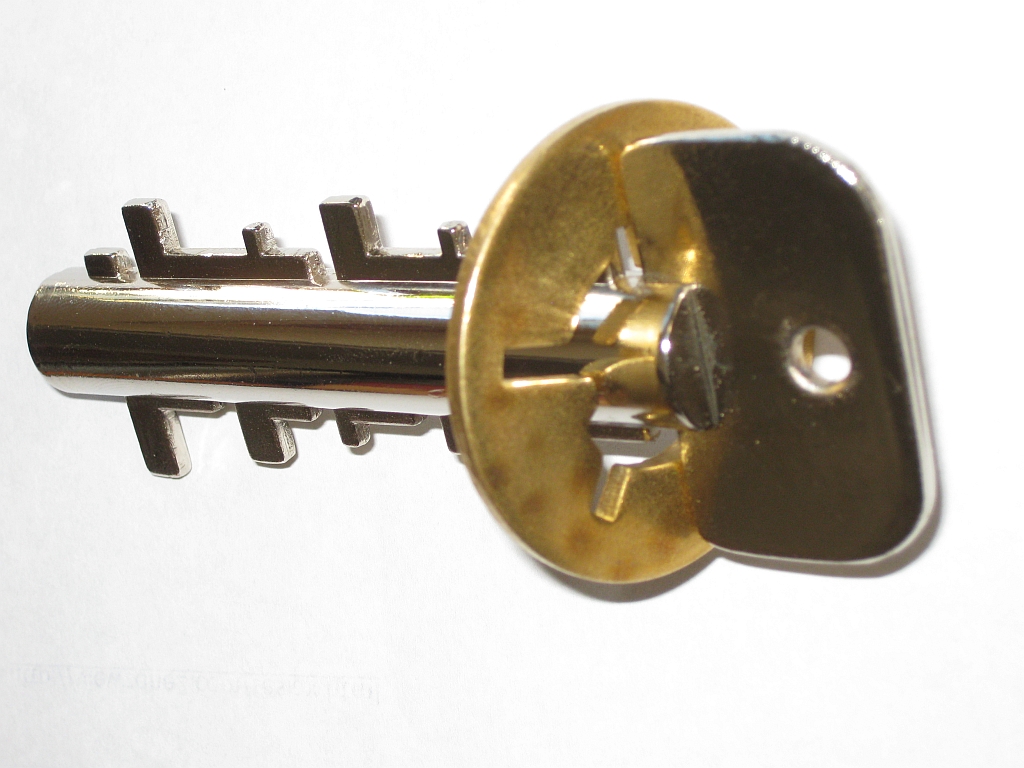
Free The Key

Free The Key by Puzzle Master

At first glance this is a nice looking puzzle, and has a solid feel to it. It’s much larger than I expected, at around 4.5″ long by 2″. The puzzle I received has some discolouration around the gold ring as can been seen in the photographs, which spoils the look slightly when close up, but sitting on the puzzle shelf you’d never know that.

The object is to remove the brass ring from the key, and then return the ring to its starting point. It seems like a simple enough objective, and really is. There are a few dead ends and more than one start point, as with any good puzzle of this type. The arms on either side of the puzzle interact with each other meaning you occasionally have to back track and re-orient the ring to get over the dual obstacles. It does mean that you have to look ahead to see which notches in the ring you’ll need to have lined up before you progress too far down the key.

Where the puzzle is let down slightly is that the fit of the ring on the main shaft of the key is slightly loose. This leads to what I’d consider cheating where you can angle the ring so it is not 90 degrees to the shaft of the key, permitting the spikes on the key through a gap in the ring it was not intended to go through, simplifying the puzzle at points. This aside, it’s a fun puzzle, and is well made for the price.

Free the Key partially open

Free the Key by Puzzle Master partially open

Puzzle Master lists this as a difficulty level 8 puzzle, however I feel that it should be lower, maybe around a 5 or 6. I solved this in under 10 minutes, both removing the ring and returning it to its starting point, and had little trouble in doing so. If you’ve not played with this type of puzzle before, it may provide more of a challenge, but a more experienced puzzler will have little difficulty with this one. If you’re looking for a gift for a younger puzzler, I’d recommend this, and it’s the sort of puzzle you’d have no worries about passing round.

Revomaze Black Extreme

This entry is part 5 of 11 in the series Revomaze

Continuing the Revomaze series, available from Revomaze and also in limited numbers from PuzzleMaster.

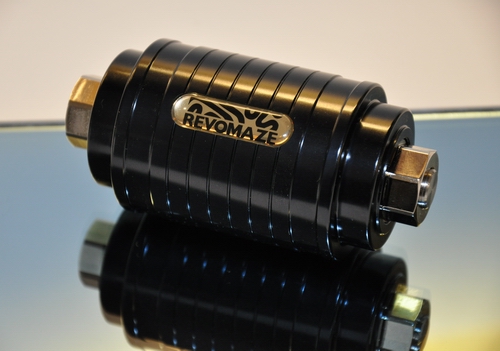
The Black Revomaze

The Black Revomaze Puzzle

I’ve already covered the basic puzzle in my earlier reviews of the Series I puzzles, so for general information on the Revomaze puzzles, I’d suggest reading that post here.

The Black Revomaze, available in both Plastic and originally Metal (although only 20 metal puzzles were produced and are very rarely available for sale from their current owners) was the first Revomaze which was not part of the main series of puzzles, incorporating Blue, Green, Bronze, Silver and Gold. When the engineering company was working with Chris Pitt on the puzzles, they produced the Black as a way to show Chris what they were capable of, and, so the story goes as a challenge to Chris to open a puzzle that he didn’t know the route through maze. Chris like the design they created so much that he added it to the line of puzzles to be produced and sold. The reason why, I’ll explain later.

Similar to the Blue and Green puzzles, the Black is a static maze, however it is much closer to Bronze in execution as the orthogonal lines from the Blue and Green seem to be non-existent leaving only curves and sharp corners. This makes for a very interesting challenge, as some of the sharp turns create very thin ledges to be navigated, increasing the chances of clicking into the ever-present trap lines. The curves also add a challenge to mapping as anyone who has tried to map the Bronze will know already.

The real beauty of the Black is the reveal you get either when mapping the puzzle (if your map is accurate enough) or in the metal puzzle when removing the core, and seeing the maze for the first time. I was fortunate enough to be able to borrow one of the few metal versions from a good friend, however due to the way I create my maps, I didn’t see the hidden secret in my map until I opened the core (although I had my suspicions!). Once open not only are is the stunning engineering to create the curves revealed, but the maze also contains a the company name! Now it’s obvious why Chris liked the black so much, and decided to produce it and allow the public the joy of solving the puzzle as well.

As a note on mapping the mazes, the map you create depends on how you view the puzzle. Either the pin can move through the maze, as though it were a person walking inside a huge static maze, or as though the pin were hanging from the ceiling, and the maze were navigated around it. In the puzzle, the pin is fixed in the sleeve, and the maze moves around it, not the other way around. This has two effects, your directions are inverted and also your start and end points are reversed. If you think about the maze itself, the start is actually in the middle of the core, and you work toward the end of the core (the leftmost point is the end). When most people think about a maze, the start at the outside and either work to the other end or the centre depending on the maze, so starting in the middle may not be natural for most.

Personally I map from the viewpoint of walking around inside the maze, and as a result all my maps are mirror images of the real maze. At one point when creating a map for the Silver, I took a wooden dowel, and carved the maze onto the dowel, using my excel map as the source. Of course this meant that my map is back to front compared with the real maze, however it did let me think around the problems I was trying to solve!

Black is a great puzzle, and really fun to solve. If you’re lucky enough to own, or be able to borrow a metal version, the core is really the highlight, but if not, don’t pass up the chance of trying a very fun puzzle with the plastic version.

Perplexus

The Perplexus is the current generation of a puzzle created by Michael McGinnis, and originally released to the public as SuperPlexus. Perplexus is available from a number of locations such as Amazon, and Puzzle Master and many other toy shops for less than $20.

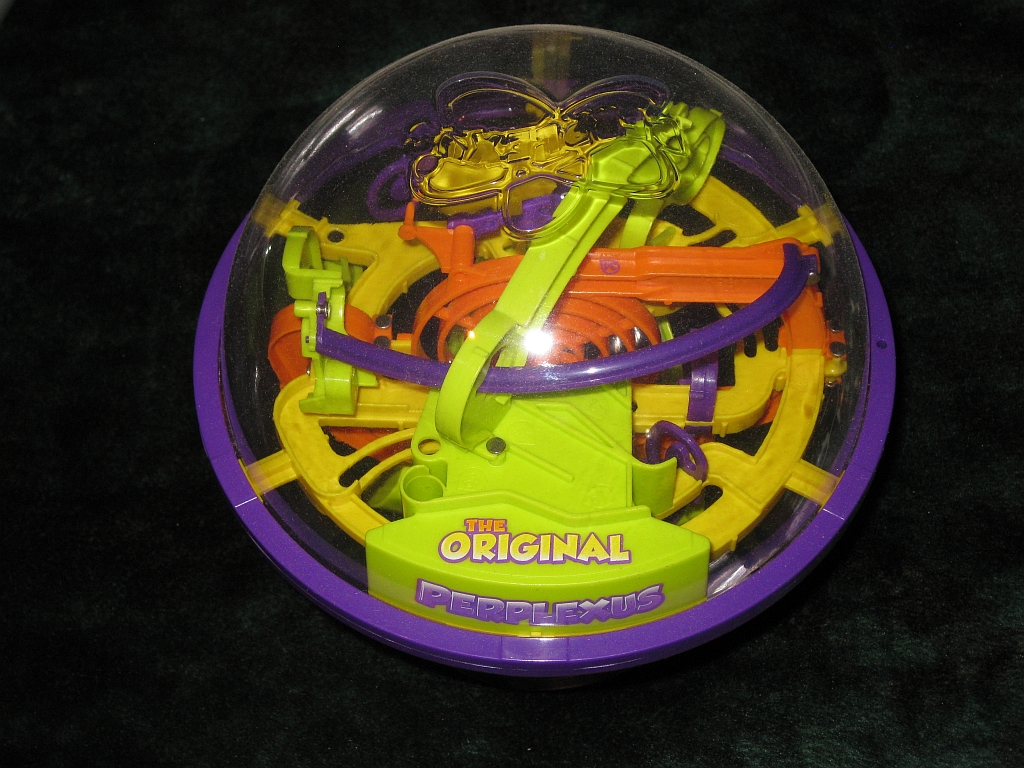
Top view of Perplexus

Top view of Perplexus

The purpose of the puzzle is to guide the ball bearing along the tracks moving from each ‘checkpoint’ from 1-100 in sequence by rotating the sphere. The original Superplexus had both sound and a timer mechanism to allow you to compete for the fastest time, however in the current version, the electronics which were rather loud an obnoxious, have been removed in favour of a simpler quieter version, where the only sound is the ball falling off the maze, and bouncing on the bottom of the perspex shell, which will happen frequently. There’s even a small stand supplied with the puzzle to stop it rolling away when you eventually put it down.

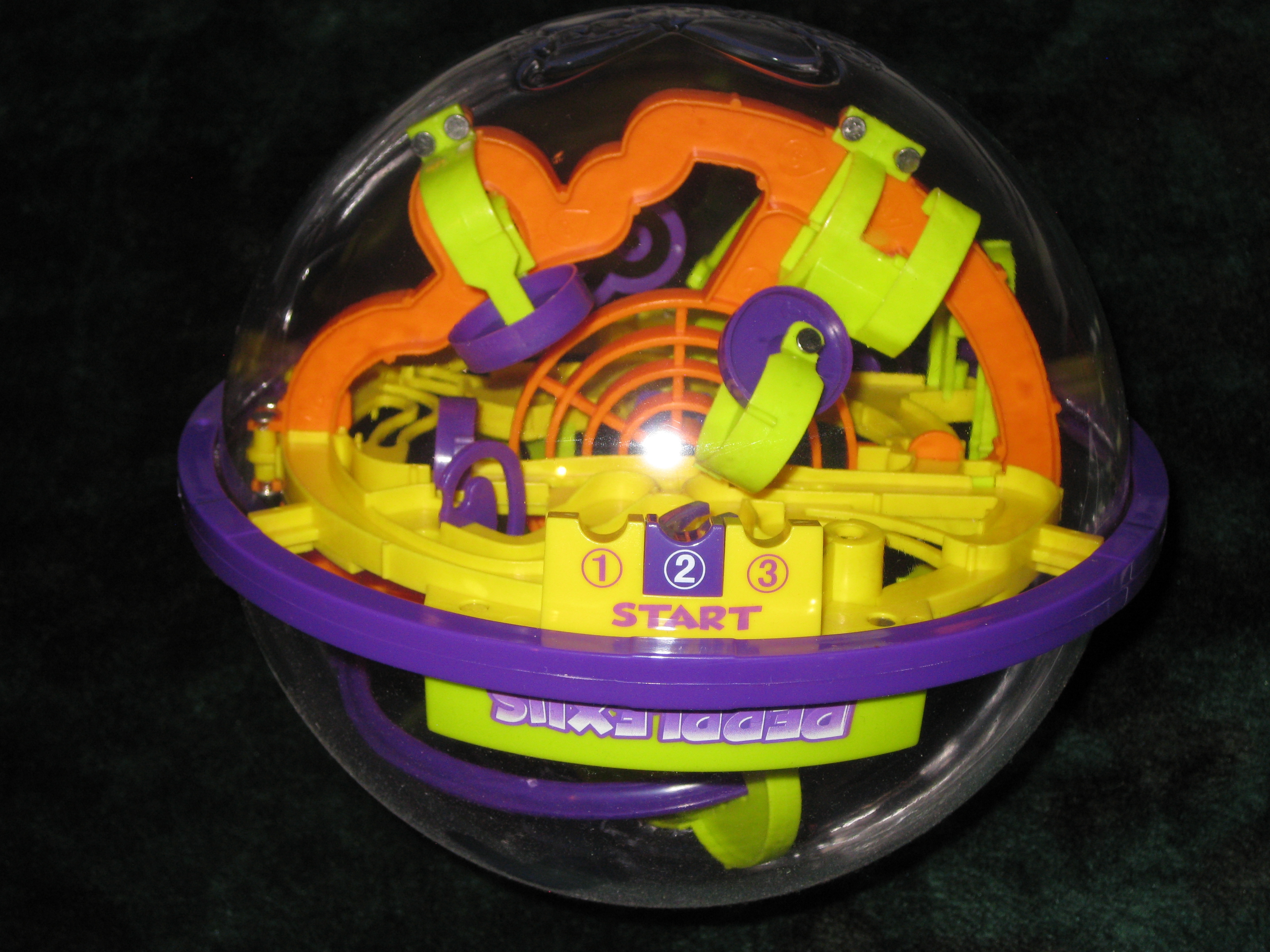
Bottom view of Perplexus

Bottom view of Perplexus

When you start playing with the puzzle, it all seems fairly simple. The path is easy enough to follow, and moving from one ‘checkpoint’ to the next is fairly straightforward. Then you hit a certain transition, where it seems all to easy for the ball to fall off and force you to go back to the start. Despite that, it never seems frustrating, and you keep going back to try to make it all the way from 1-100. As a nice design feature, there are three start points in the puzzle, allowing you to restart from 1/3 and 2/3 of the way through so you can practice each section. The real challenge though is the full run in one shot. There are some very clever sections in the puzzle, such as the cup you drop the ball into then need to swing from one side to the other before tipping the ball back out onto the next track to continue. Overall it’s well thought out, and I am sure went through many iterations before finally becoming the puzzle that it is today.

Michael McGinnis was a 3D design teacher and came up with the idea for perplexus as a toy in the late 1970’s however it took him over 20 years to bring the idea to the market as it is today. He has also created super sized versions of the puzzle from wood and I highly recommend checking out his website for the pictures, and some of the story behind the creation of these huge puzzles. ( http://www.santarosa.edu/~mmcginni/superplexus/) While too big and heavy to hold in your hands, they run on rails allowing you to freely spin the sphere. I have no doubt that this added restriction adds an extra challenge to the puzzle.

Perplexus Epic

Perplexus Epic

With the launch of two new Perplexus puzzles set for May 6th 2011, the Rookie, which should be a simpler version of the original, designed for younger children, and the harder ‘Epic’ Perplexus coming in a very slick icy blue and white colour scheme and 125 checkpoints to navigate, there is a lot to look forward to in the series. I’d certainly recommend the original, and once I pick up the Epic, I’ll be sure to pass on my thoughts.

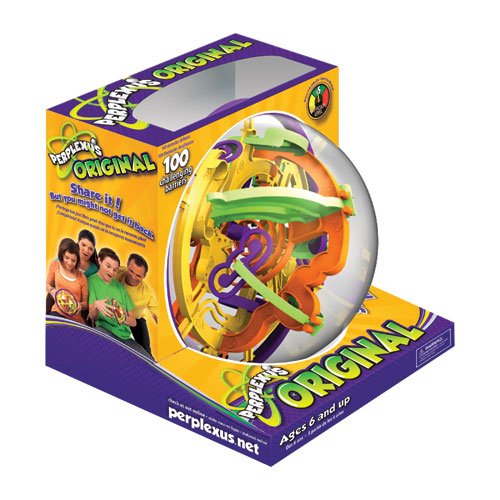
The Perplexus puzzle in the box.

The Perplexus puzzle in the box.

The Perplexus is a fun dexterity puzzle, which seems to be marketed more toward a younger audience with its bright colours and the pictures of a children playing with the puzzle while the parents watch on from behind on the box, however I can assure you that this puzzle will keep the whole family amused as they try to navigate the ball through the maze. Leave this one sitting on the table, and you can be sure people will want to pick it and play, and before you know it they’ll be off to buy one for themselves.

Revomaze Silver Extreme

This entry is part 4 of 11 in the series Revomaze

As promised previously, here’s the fourth review in the Revomaze series, available from Revomaze and also in limited numbers from PuzzleMaster. The last few of these puzzles are currently being made, and it’s unknown whether more will be made of the Silver puzzle, so if you want one, get it now!
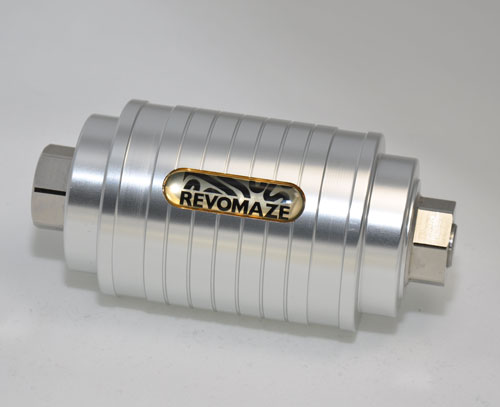
The Silver Revomaze

The Silver Revomaze Puzzle

I’ve already covered the basic puzzle in my first review of the blue, so for general information on the Revomaze puzzles, I’d suggest reading that post here.

The fourth puzzle from Revomaze is the Silver. This puzzle, like the Bronze isn’t available as a plastic puzzle, as it’s not possible to create some of the internals in plastic.

The Silver is rated by Revomaze as having a difficulty of 90/100 (extreme) and an estimated opening time of 160 hours. (Yes, 160 is correct, it’s not a typo!) It is described as a dynamic maze and is the hardest puzzle to be released to date from Revomaze. This is a big jump up from the Blue and Green puzzles, and is a big learning curve from even the Bronze.

While the Bronze puzzle had a trap that you couldn’t get out of very early in the puzzle, Silver seems even worse. When you start, there is a tiny ‘L’ shape you can explore, one trap and nothing else. It seems that Chris has this puzzle locked up tight. The new elements added to Silver are numerous, and understanding each of them takes time. New in the Silver is the added difficulty that how you orient the puzzle while solving it affects things in the maze.

The biggest kick in Silver though is what is lovingly referred to in the forums as the “not-a-canyon”. You’ll know it when you get to it as the shaft will freely spin 360 degrees, with no seeming obstructions at around the half way mark on the shaft. Short of growing wings, there seems to be no way of crossing this gap. The puzzle gives you no feedback as to what’s going on, and at this point the only way over is to put the puzzle down and Think (c) Allard.*

There is a web clue on the Revomaze website which if you can figure it out might help you across. There’s nothing about the clue that is simple, so deciphering it may take as long as crossing the gap itself. (yes, that was a hint for the Silver clue but it’s all I’m giving you!)

Worse than this is that the SWAMP awaits you once you cross the not-a-canyon, and it’s even stranger. The spinning canyon is the easy bit! Once in the SWAMP, you’ll find walls appearing and disappearing and no obvious way out. It’s time to put the thinking caps on, and figure out what could be going on to cause the strangeness you’re experiencing. Only when you truly understand it will you be rewarded with progress. There be crocs in there!

Having eventually found your way out of the SWAMP, you’ll see that glorious dot on the shaft. You’ve made it. Your hands are shaking at this point, and you’re excited. Wait, no, what the? The dot stops a centimetre from lining up with the dot on the sleeve. What could Chris have possibly done to leave you so close yet so far from the end? The final twist to the Silver really shows you just how cleverly built these puzzles are, and just how evil Chris is.

It took me around 150 hours to open the Silver. It’s an amazingly tough puzzle, but when you finally open it, and see the beauty of that maze inside, it’s all worth it. Not to mention that you can stop swearing at Chris and his ingenious mechanisms.

I’m asked fairly frequently whether you need to have solved one of the other puzzles in the series before opening Silver. The only answer I can give is that no-one so far has opened Silver without having previously opened another puzzle. With only approximately 36 Silver puzzles opened since their launch in October 2009 it’s not an easy puzzle, and truly deserves its name as one of the most difficult puzzles in the world.

You may remember me mentioning back in the first post in the series of reviews that the puzzle was pretty tough and hard to break. Well Silver when initially released had a small problem. Something inside didn’t quite work the way it was supposed to, and as a result a number of the original Silvers were un-openable. When Chris realised the issue, he sent all the people who had a V1 a free replacement for their puzzles. So V2 was issued which had a couple of small tweaks inside to fix the issues, and ensure they worked the way they were intended. Now that’s what you call good Customer Service. All Silver’s sold now are V2, and although they no longer have the double dot on the sleeve to confirm they are V2, it’s safe to say that when you buy one it will be the V2. The V1’s are with their original owners in most cases, or still with Chris in a few.

The one word of warning I’ll give is that if you do decide to buy one, and I highly recommend you do, this one will take its toll on your fingers and your sanity. You have been warned. This is a brilliant puzzle, but it’s by no means easy.

* If you want to know who Allard is and why he Thinks a lot, then join the Revomaze forum!
Revomaze Bronze Extreme

This entry is part 3 of 11 in the series Revomaze

As promised previously, here’s the third review in the Revomaze series, available from Revomaze and also in limited numbers from PuzzleMaster.

Revomaze Bronze Extreme

Revomaze Bronze Extreme Puzzle

I’ve already covered the basic puzzle in my first review of the blue, so for general information on the Revomaze puzzles, I’d suggest reading that post here.

The third puzzle from Revomaze is the Bronze. This puzzle isn’t available as a plastic puzzle, as it’s not possible to create some of the internals in plastic.

The Bronze is rated by Revomaze as having a difficulty of 80/100 (extreme) and an estimated opening time of 40 hours. It is described as a dynamic maze and is the first puzzle in the series that really challenges you to think as well as feel your way through the puzzle. This is a big jump up from the Blue and Green puzzles, and this is where many people seem to get stuck in the series. It’s no longer just a simple maze to get from the start to the end. There are obstacles in the way which you really need to think your way around.

The first big challenge you meet in the Bronze after only six moves is lovingly referred to as “The Pool”. This is a trap, with no easy way to reset the puzzle. So from the first few turns in this puzzle, it’s clear that the rules you thought you knew have been broken. Also gone are the nice straight lines you have been used to in the previous two puzzles. This one is full of curves, which adds an extra challenge. The puzzle falls into three sections, with some real thinking required to move from one section to the next. To begin with, you can only move through around the first quarter of the space available in the puzzle, with no seeming way to move further. The way forward is in understanding the new elements in this maze, and getting over the feeling that “You know how this works” and “That can’t be possible”. The biggest challenges in this puzzle are your assumptions as to what is happening inside. More often than not they’re wrong.

The key to solving this puzzle, as with most of the puzzles is in creating the best map you can. You should also be used to how the pin feels when it’s in the maze by now, and that is key to understanding what’s going on. The dexterity required here also goes up a notch, and having toughened up your fingers on the previous puzzles will certainly help.

It took me around 6 hours to open the Bronze, but I’ll admit I had already played a little with the Silver before I attempted Bronze, so I understood some of the new mechanisms that were introduced in Bronze, making that a little easier. Bronze is my favourite in the series, and probably the one I’d recommend if you want a real challenge, and can only afford one puzzle. You’ll not regret it as seeing the core of this puzzle is a work of art. Don’t blame me if you spend many hours on this one though. It’s a tough puzzle but well worth the effort.

I’m asked fairly frequently whether the Blue and Green are needed before solving Bronze. In all honesty, I don’t think they are, but the challenge is much tougher if you’ve not done at least one other Revomaze before attempting this one.

The one word of warning I’ll give is that if you do decide to buy one, and I highly recommend you do, you’ll end up getting more. After solving one, there are few who can resist coming back for more.

Revomaze Green Extreme

This entry is part 2 of 11 in the series Revomaze

As promised previously, here’s the second review in the Revomaze series, available from Revomaze and also in limited numbers from PuzzleMaster.

Revomaze Green Extreme Puzzle

Revomaze Green Extreme Puzzle

I’ve already covered the basic puzzle in my first review of the blue, so for general information on the Revomaze puzzles, I’d suggest reading that post here.

The second puzzle from Revomaze is the Green. Again, I have the extreme version which is the heavier metal version of this puzzle. Again it’s also available as a plastic Obsession version.

The Green is rated by Revomaze as having a difficulty of 60/100 (challenging) and an estimated opening time of 10 hours or just 3 hours if you’ve already opened the Blue puzzle. It is described as a static maze and really is a nice step up in the learning curve for the series. The puzzle introduces a new element not seen in the Blue puzzle, and extends the trickier sections from the Blue to be really very challenging in this puzzle. It is a nice step up from the original puzzle, and took me around 5 hours to open. Mapping the maze in this puzzle definitely helps in the trickier sections. If you were to try to solve this as your first puzzle in the series, it’s definitely harder, but not impossible. That reset line is ever present in this puzzle and there are many more blind turns to throw you off the correct path.

The one word of warning I’ll give is that if you do decide to buy one, and I highly recommend you do, you’ll end up getting more. After solving one, there are few who can resist coming back for more.